Does your website really need an update - or are you just bored?
Have you ever opened your website and thought, “This doesn’t feel like me anymore.”
Or worse: “I’m so tired of looking at this. My audience must be too.”
So you start wondering:
Should I redesign it? Rebrand? Rewrite everything? Start over completely?
Sometimes the answer is yes.
But sometimes? You’re just bored. (Spoiler: your audience does not look at your website nearly as often as you do. They are not bored of it.)

Here’s the brutal truth:
Updating for growth is smart. Updating because you’re bored is expensive.
Before you decide which one you’re about to do, let’s separate ego from evidence.
First: not every website needs a full overhaul
I may be cutting into my own revenue streams here, but websites don’t need constant redesigning to stay relevant.
They need clarity.
They need structure.
They need alignment.
What they don’t need is a new colour palette every time you feel restless.
A strong website should be built on foundations that last: clear messaging, logical page hierarchy, intentional calls to action, and SEO structure that compounds over time.
If your site is:
Converting consistently
Ranking in search
Generating quality enquiries
Supporting your current business model
… you probably don’t need a rebuild.
You might just need refinement.
A homepage headline that’s tightened.
A services page that reflects your evolved offers.
Some updated imagery.
A small website refresh.
But if your site was never built strategically in the first place - if it was rushed, DIY’d, or stitched together over time - then that’s a different conversation entirely.
The difference between “refresh” and “rebuild”
This is where most business owners get it wrong.
They assume dissatisfaction automatically equals redesign.
It doesn’t.
A website refresh is strategic.
It’s focused. Intentional. Targeted.
You’re not changing everything. You’re improving what’s already working.
That might look like:
Refining your copy to reflect clearer positioning
Improving navigation to reduce friction
Updating outdated imagery
Strengthening on-page SEO
Testing new calls to action
Simplifying sections that feel cluttered
This is evolution.
Your business shifts. Your messaging sharpens. Your audience deepens. Your website adjusts accordingly.
A refresh keeps momentum without destabilising what already works.
On the other hand, a rebuild is structural.
New positioning.
New audience.
New offers.
New business model.
Major architecture changes.
This is reinvention.
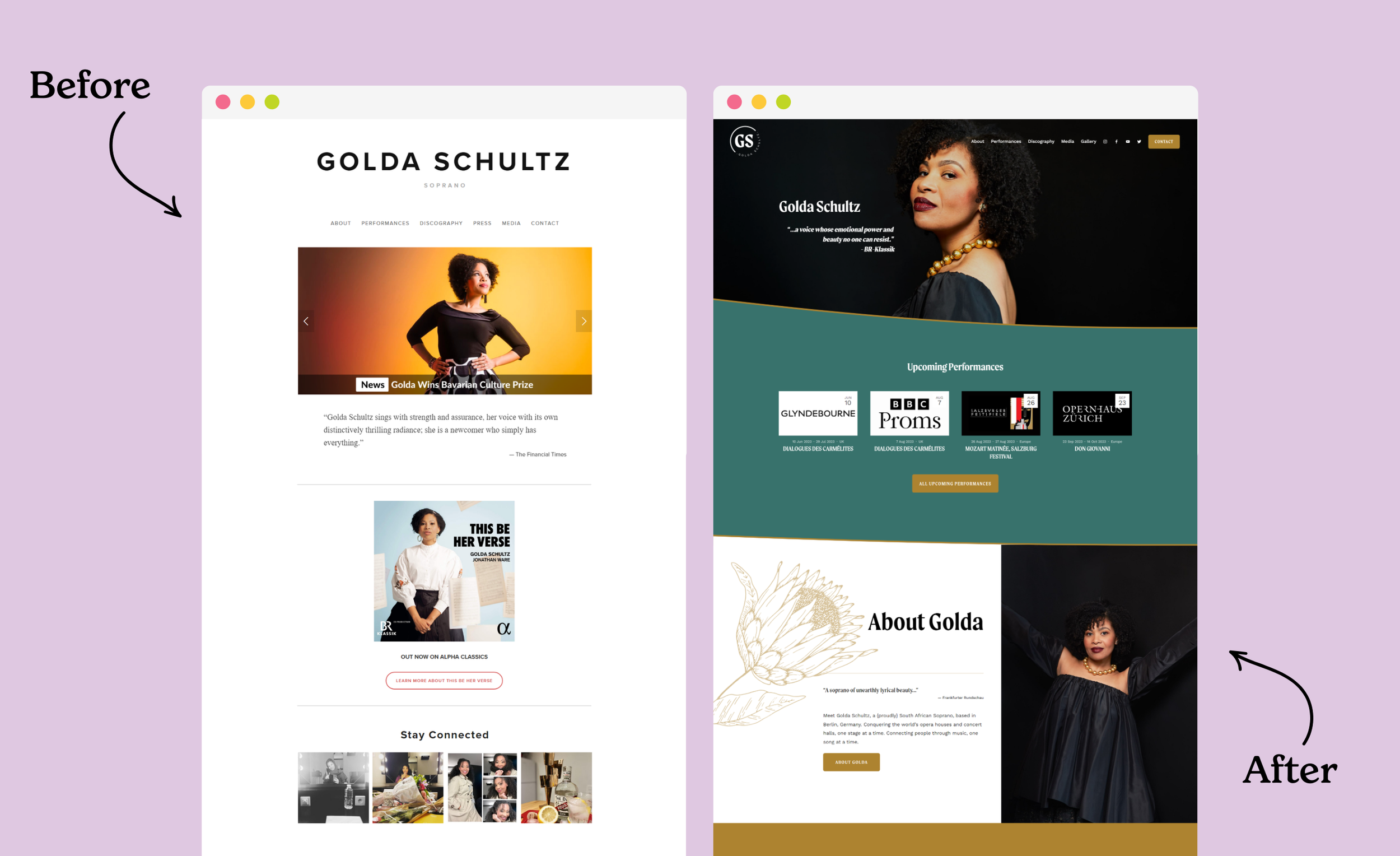
If you’ve pivoted significantly - moved upmarket, changed niches, added entirely new services, or outgrown your original brand - your website needs to reflect that shift at a foundational level.
You’re not tweaking. You’re rebuilding the framework.
Signs your website actually does need attention
Still unsure whether you’re bored or misaligned?
You likely need to rebuild your website if:
Your offers have changed but your pages haven’t.
You hesitate to send people your link.
You’re overexplaining what you do on sales calls.
Your SEO traffic has plateaued despite consistent effort.
Your branding and messaging reflects who you were two years ago.
The structure feels messy, confusing, or stitched together.
Your website should reduce friction - not create it.
If it’s not supporting clarity and confidence, it needs work.
Signs you don’t need to touch it (yet)
You probably don’t need a rebuild if:
You’re still testing positioning.
Your traffic is low due to visibility, not design.
You haven’t given your current strategy enough time to compound.
You’re chasing a new aesthetic because someone else launched something shiny.
Design without strategy is decoration.
Pretty doesn’t fix positioning.
If your foundations are solid, the smarter move is incremental improvement:
Updating outdated copy
Improving headline clarity
Refining SEO structure
Strengthening internal linking
Simplifying navigation
Testing calls to action
Small, strategic changes compound over time.
You don’t need a new website every two years.
You need alignment.
Before you redesign anything, do this
Instead of jumping straight into your website backend or booking a designer, pause.
Audit your homepage messaging.
Review your offers for alignment.
Check your top-performing pages in Google Analytics.
Look at where users drop off.
Review your navigation flow.
Identify one friction point in your buyer journey.
Then fix one thing.
Momentum builds from movement - not perfection. Often, clarity removes 70% of the frustration you thought required a rebuild.
The real question to ask
Instead of: “Do I need a new website?”
Ask:
“Is my website supporting the business I’m running now?”
“Does it reflect my current authority?”
“Is it making it easier - or harder - for people to buy?”
Those questions cut through noise quickly.
Your website should evolve as you evolve.
Not because you’re restless.
Not because the fonts are trending.
Not because someone else rebranded.
But because your business grew - and your digital presence needs to catch up.
Strategy before pixels. Always.
Ready to decide?
If you’re unsure whether you need a refresh or a rebuild, start with clarity.
Then book a [free] call with me and we’ll look at what’s actually holding your site back - and what’s already working in your favour.
No drama. No unnecessary overhauls. Just smart next steps.