The invisible work: what I do before I ever open a design file
The first thing I do when a new client comes to me has nothing to do with design.
No mood boards. No colour palettes. No Squarespace templates. The design file stays closed - sometimes for days.
What happens first is something most designers skip entirely. And it's the reason websites built without it tend to miss the mark, even when they look good.
This is what the invisible work actually looks like.
What "strategy before design" means in practice
You may have heard me say it before. Strategy before pixels. It sounds like a principle - something you'd nod at and move on from.
But, to me, it's a process. A specific set of questions, in a specific order, that have to be answered before a single design decision gets made.
This is what my process looks like for every website project I work on:
→ Clarify: define the strategy and positioning
→ Architect: map the structure and buyer journey
→ Refine: align the message and psychology
→ Design: build with clarity and precision
→ Sustain: support growth beyond launch
Here's what I'm working through in Stage 1 - the Clarify stage.

The questions I ask before anything else
Who is this website actually for?
Not "women in business" or "service providers." The specific person. What they are dealing with right now. What they’ve tried that hasn't worked. What they are searching for at 10pm when they finally sitting still.
I'm looking for one clear answer: who is the ideal client, and what do they need to understand about this business before they'll feel confident booking?
If that's not clear, the website can't do its job. It'll try to speak to everyone and land with no one.
What is this business actually offering?
This sounds obvious. It rarely is.
Most established founders have an offer suite that's grown organically - things added over time, some renamed, some retired, some positioned in ways that made sense three years ago but don't anymore.
I look at what's being offered against who it's for. I'm asking: does this offer match the client you're trying to attract? Are you leading with the right thing? Is anything on the list creating confusion?
This often surfaces a positioning gap the client already felt but hadn't named yet.
What is the one thing this website needs to do?
Every website has a primary job. Book a discovery call. Build the email list. Direct people to the right offer. Generate enquiries.
When a website tries to do everything, it usually does nothing particularly well. The Clarify stage is where I nail down the primary conversion goal - what "success" looks like when someone lands on the homepage.
That goal becomes the filter for every single design decision that follows.
What's not working right now - and why?
This is the diagnostic part. And it's the part that takes real experience to do well.
"Something's off but I don't know what" is the most common thing I hear. It's also the most honest thing. The founder knows it. She's been tweaking copy, moving sections around, asking for feedback. It still doesn't feel right.
I'm looking for the actual source of the problem - not the symptom. Is it the messaging? The structure? A mismatch between the offer and the audience? A homepage that's trying to tell the whole story instead of starting the right conversation?
Most of the time, the thing that's not working isn't the thing that looks broken.
Where does SEO fit?
Search visibility isn't something I bolt on at the end. It starts here, in the strategy stage.
I look at what the business is actually trying to be found for. What's the audience searching for when they're ready to hire someone like this? What language are they using? What questions are they asking?
This informs everything from the page structure to the headings to the copy - before the design is even sketched.
Why this stage gets skipped
It's harder to sell than design.
Design is visible. You can see it, screenshot it, share it. Strategy is invisible - it's the thinking behind why each element exists and where it lives.
Most designers skip the Clarify stage because it takes time, requires expertise outside design, and the client often doesn't know to ask for it. They're expecting a result they can see. The strategy work is what makes the result actually function.
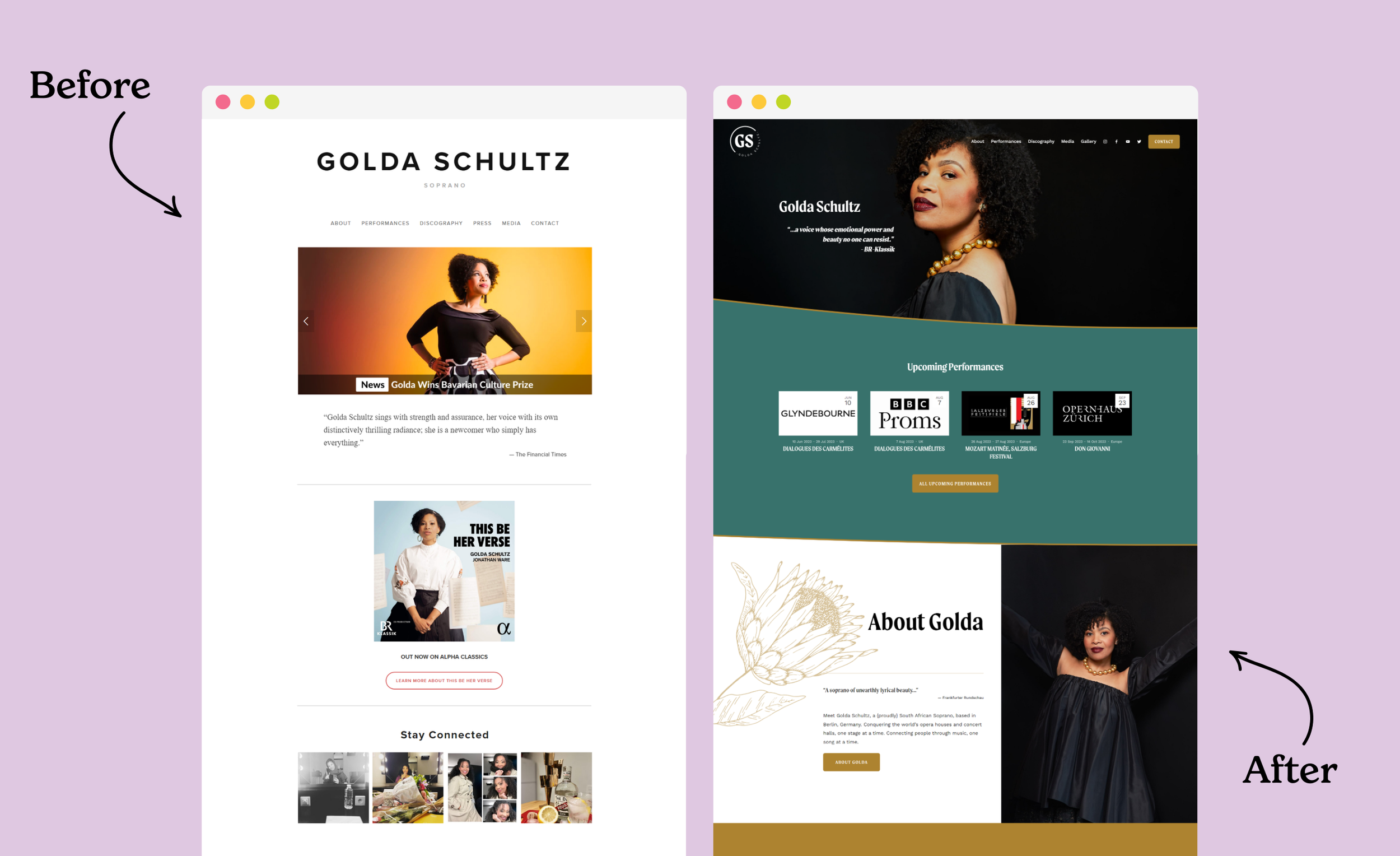
When this stage gets skipped, you end up with a beautiful website that attracts the wrong enquiries. Or one that gets traffic but doesn't convert. Or one that looks completely different to what the business has become.
The design was fine. The strategy was missing.
What this looks like at different offer levels
The Clarify stage runs across every project - at different depths depending on the engagement.
In a Website Roadmap, it's the whole point. I'm diagnosing what's not working and giving you a clear picture of what to fix, and in what order, before any design work begins.
In a Core Website or Signature Website project, the Clarify stage runs before we ever consider a pixel. Strategy sessions, intake work, audience research. By the time I open a design file, I know exactly what I'm building and why.
The invisible work is what makes the visible work worth looking at.
Where to start
If you're at the stage where something feels off but you're not sure what - that's usually where the Clarify stage is most useful.
A Website Roadmap gives you that diagnostic without committing to a full build. It's a clear picture of what's working, what isn't, and exactly what to fix.